A Winter Window Display with Found Branches
A winter window display with found branches brings seasonal character indoors while keeping daylight and the garden view clear through careful spacing.
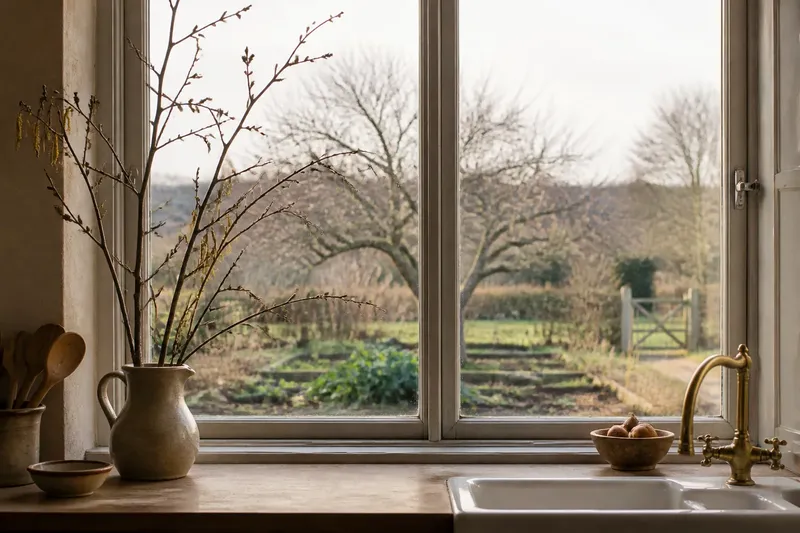
The common mistake with a winter window display with found branches is gathering too many and arranging them as a dense bundle. The result can block the view, crowd the sill and make a simple seasonal detail feel heavy. A few carefully spaced stems can frame the glass instead, leaving daylight and the garden in view.
Say you have a wide kitchen window, a plain sill and a handful of fallen branches from the garden after pruning. The aim is not to fill the opening. It is to make a loose silhouette at one side, with enough space around it for the window to remain a window.
Start with the window
Before choosing branches, stand where you usually look out: at the sink, table or doorway. Notice which part of the garden matters most from that position. A gate, a bird table or the shape of a distant tree may be the view you want to keep unobstructed.
Look at the window’s proportions, too. A low, broad opening often suits a horizontal arrangement, while a tall sash can take a few upright stems. Neither calls for symmetry. A small cluster at one end can feel more natural than matching bundles on both sides.
In this invented situation, imagine the kitchen window looks across a vegetable plot towards a bare apple tree. The person arranging it decides to keep the centre of the glass clear, because that is where the apple tree sits in the view. This decision gives the arrangement a useful boundary before a single branch is selected.
Choose suitable branches
Gather only material that is already fallen or that you are permitted to prune. Look for sound, dry stems with a clear outline: hazel twigs, willow, dogwood or fruit-tree prunings can all provide interesting lines. A few buds, seed heads or small cones add detail without turning the arrangement into a dense bundle.
Check each branch for loose bark, damp rot, sharp broken ends and insects before bringing it indoors. Avoid collecting from roadsides, public land or protected areas unless you have permission. If a branch is brittle or sheds heavily, leave it outside; the sill is an awkward place to catch falling debris.
Keep the mix restrained. One branching stem can provide a strong silhouette, while two or three finer stems can echo its direction. Think of the branches like a few coats on a peg: each needs room to keep its shape, rather than being pressed into a crowded mass.
Test the silhouette
Lay the branches on the floor or a table in front of the window before placing them in a vase. Turn each stem until its forks and tips create a readable outline against the glass. Look for branches that reach in different directions, rather than several ends forming one blunt line.
Then hold the arrangement beside the window and view it from inside and outside. From indoors, check whether the stems cross the important part of the garden. From outside, notice whether the display reads as a loose group or as clutter on the sill. Adjust the angle before deciding on the container.
For the imagined kitchen, one forked hazel branch forms the tallest line near the left frame. Two shorter twigs lean gently towards the centre but stop before the apple tree’s outline. The visible result should be a frame around the view, not a screen across it.
Set the spacing
Place the main branch first, then add only the stems that improve its shape. Leave visible gaps between them. Those openings matter as much as the twigs: they let light pass through and stop the display becoming a solid patch against the glass.
Use a stable, plain vessel that suits the sill. A stoneware jug or a narrow-necked bottle can hold a small group without competing with the branches. If the stems wobble, try a heavier container or use a little clean gravel at its base. Keep the vessel clear of window handles and any area needed for condensation to drain.
In this case, the first placement feels too central. The person moves the jug towards the left, separates the two shorter twigs and turns one fork outwards. The centre of the pane opens up, and the arrangement still has enough presence to read from the kitchen table.
Keep the view open?
How many branches should a window display use?
Begin with one strong stem and add a small number of finer branches only if they improve the outline. The right quantity depends on the window and the size of the stems, so let the amount of visible glass guide you.
Where should the arrangement sit?
Try one end of the sill first, especially if the centre frames a garden feature. A cluster at the side can feel intentional while preserving a clear sightline through the middle.
What can hold found branches?
A stable stoneware jug, bottle or simple vase can work, provided its opening grips the stems and its base does not rock. Choose a vessel that leaves the window hardware accessible.
How can the arrangement stay light?
Keep gaps between stems, vary their directions and remove any twig that fills an opening without adding a distinct line. Check the display from your usual seat as well as close up.
Make a small adjustment
Once the arrangement is in place, step back and look through the window again. If a twig interrupts the view, rotate it or remove it rather than adding more material to balance the opposite side. If the silhouette feels flat, turn one branch so its forks show against the pale sky.
Check the display after a change in daylight. A branch that appears delicate in the morning may look dense against a darker afternoon garden. Repositioning a single stem can restore the open spaces without rebuilding the arrangement.
For the kitchen example, the final display remains at the left edge of the sill, with the apple tree visible through the open centre. The useful lesson is simple: decide what the window should still show, then let the branches take the remaining space. A winter window display with found branches works best when the garden remains part of the composition.