How to Display an Old Spade as a Garden Ornament
Display an old spade as a garden ornament without disguising its working history: choose a fitting setting, preserve its character and keep it secure.
The common mistake with an old spade garden ornament is to treat it as decoration before checking its condition and setting. Scrub away its marks, paint the blade or prop it where people pass, and you lose its history or create an avoidable hazard. A convincing display keeps the tool’s former work visible and gives it a secure place.
Start with the spade itself, then decide whether it belongs in use, under cover or on display. These practical checks will help you place it without turning a working object into a prop.
Read the blade
Look at the blade’s outline before choosing a spot. A spade usually has a relatively flat blade suited to cutting and turning soil; a shovel often has a more scooped shape for lifting loose material. Names vary by place and maker, so let the shape guide you.
Note whether the blade is narrow or broad, pointed or squared, and whether it has shoulders shaped to take pressure from a boot. These features help explain what sort of garden work it once served. A narrow blade may make sense beside close planting, while a broad one relates more readily to open beds.
Think of the spade like a well-used kitchen chair: its character comes from the job it did, not simply from its age. A tool placed near soil or a potting bench has a clearer connection to its history than one displayed on an unrelated wall.
Inspect the condition
Brush off loose soil with a dry brush, then inspect the blade, shaft, socket and fastenings in good light. Look for splinters, a moving head, a cracked handle, sharp edges or soft, unstable wood. These are signs to pause before handling or displaying it where someone might pick it up.
- Check whether the head shifts on the shaft; if it moves, keep the spade out of use and ask a tool repairer to assess it, rather than leaning it where someone may lift it.
- Check the handle for cracks or splinters; if the wood is sound, display it where hands will not brush past, but if it is damaged, keep it secured and seek suitable repair advice.
- Check the blade edge for sharpness or loose fragments; if it is stable but sharp, position it beyond casual reach, while a loose or deteriorating edge calls for professional advice before display.
- Check the metal and wood for active flaking, softness or worsening damage; if the surfaces appear stable, use gentle dusting, but if they seem fragile, stop cleaning and consult a conservator.
- Check whether the spade is historically important or has an uncertain finish; if its surface is familiar and stable, remove only loose dirt, but if its significance or treatment is unclear, avoid sanding, polishing or repainting and ask a conservator.
- Check whether the planned position exposes the shaft and blade to rain or damp ground; if it does, move the spade beneath a covered shed or porch, while a dry, secure indoor display is the alternative when no shelter is available.
Patina is not the same as active decay. Preserve worn hand marks and other stable signs of use, but do not treat a loose head or crumbling handle as harmless character. If the object is fragile or valuable, ask a conservator before cleaning or altering it.
Match tool and setting
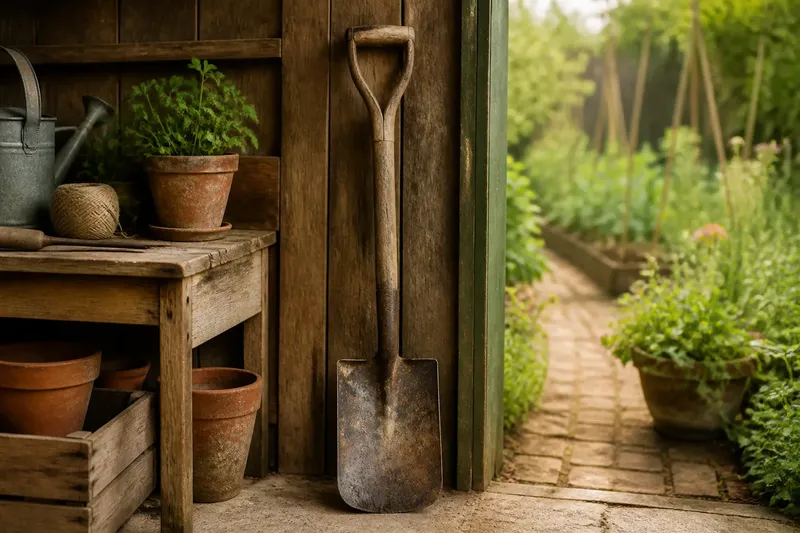
Choose a place with a visible connection to gardening: beside a potting bench, near terracotta pots, or against a timber wall by the vegetable beds. A coil of garden twine, a wooden dibber or a plain watering can can reinforce the setting without making it look staged.
Imagine a narrow kitchen garden with a small timber shed, a brick path and a spade with a stable head but a weathered shaft. The owner brushes off loose soil, checks that the head does not move, then rests the spade just inside the shed beside the potting bench. The pots make its purpose clear, while keeping it inside leaves the path open and protects the worn wood from rain.
If the tool is too delicate for outdoor exposure, display it indoors where a view of the shed or beds still links it to garden work. Keep it near the activity it once served, rather than making it the centrepiece of an unrelated room.
Choose a secure position
Leaning, hanging and standing each suit a different space. A spade can lean against a shed wall if the blade rests securely and the handle cannot slide into a path. A sound wall hook can keep it clear of damp ground, while a stable holder may suit a covered work area if the blade cannot tip towards passers-by.
Check the view from the garden entrance and from the place where people work. If the handle crowds a doorway or catches clothing, move it. If a wheelbarrow must pass, keep the display out of its route rather than asking people to manoeuvre around the tool.
For an outdoor display, choose shelter over bare exposure to rain and damp soil. Strong sun can also be hard on worn wood. If no covered position is available, an indoor display is the more considerate option; follow any relevant local rules where they apply.
Keep the garden visible
Let the spade sit within the garden’s existing character. Against plain timber, its outline may stand out; against stone, it can echo the practical restraint of a shed. Avoid slogans, ribbons and artificial rust effects that obscure the original materials.
Check what sits behind and below the blade. Dense stems or a jumble of equipment can make it disappear, while a clear patch of wall helps the eye recognise it. Keep it close to signs of gardening, but leave enough space for access to nearby beds and tools.
Seasonal growth may partly veil the blade in summer and reveal it again when stems die back. That change is fine while the spade stays secure and routes remain clear. Move it if foliage blocks access or the tool becomes unstable, not simply because the scene has changed.
Decide on future use
A sound spade may remain useful; a damaged one may be better kept as an object. Check the handle, head fastening and blade, and consider whether it feels safe and comfortable to hold. Do not put a spade with a cracked shaft or loose head back to work without suitable repair. If you are unsure, ask a tool repairer or another qualified professional.
There is a middle ground: keep a serviceable spade under cover and use it occasionally, rather than leaving it in a border. If it is display-only, make that clear through a secure position away from casual handling. Its form can still suggest garden work without implying it is ready to dig.
Questions about display?
Can an old spade stay outdoors?
It can, but shelter is kinder to worn wood and metal than exposure to rain and damp ground. Check for movement, splinters or worsening damage, and move it under cover if its condition changes.
Should I clean the blade?
Use a dry brush to remove loose soil, then stop if the surface looks fragile or significant. Avoid aggressive polishing or repainting, and ask a conservator about an object of uncertain value or finish.
How can I tell a spade from a shovel?
A spade generally has a flatter blade for cutting and turning soil, while a shovel often has a more cupped blade for lifting loose material. Names vary, so the blade’s form is the more dependable clue.
Where should I display a spade?
Choose a sheltered spot near a shed, potting bench or garden bed where its working role makes sense. Keep it out of paths and secure it so the blade cannot tip or catch clothing.
Let its use show
An old spade garden ornament feels at home when its working shape, worn surface and garden setting belong together. Check its stability before choosing a position, preserve marks that remain sound, and move it if weather or foot traffic puts the object or a passer-by at risk. That small distinction between a tool ready for work and one kept for display makes the arrangement more honest as well as safer.